Posts

Showing posts with the label Week 6

Extra Credit Reading Notes: Mythology Overview Videos
Image
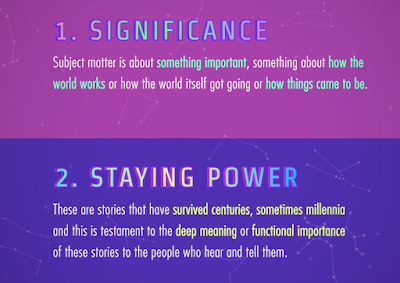
Extra Credit Reading Notes: Mythology Overview Videos (Significance and Stay Power of Myths: screenshot from What is Myth? ) For extra credit readings this week, I watched the Mythology Overview videos which included the Crash Course videos What is Myth? , Theories of Myth , and The Hero's Journey and the Monomyth . I have watched other Crash Course series and enjoyed them very much so I was happy to see them as options for this assignment. I liked that the first video explained myths and tried to nail down a definition that would make sense to most people. I knew of some of the functions of myths, but I had not heard the word "euhemerism" before and found that to be interesting. I also did not know that the idea of Aryans that influenced Germany had roots in myths. The theories surrounding myths were also interesting, though since I am a psychology major, I cringed somewhat when certain theories and ideas from Freud and Jung were brought up. However, I understan...

Week 6 Story: Muhammad's Luck

Image
Week 6 Story: Muhammad's Luck This story has been added to my Portfolio! Click here to view the most up to date version of the story. (Bow and arrow: image by sammo241 ) This story is a sequel to Muhammad Tirandaz, the Archer . Previously, Muhammad Tirandaz the archer became known for his abilities and ended up not only employed by the King, but also earned the rank of Commander-in-Chief of the King’s armies. Now, this may make Muhammad sound like a very skilled warrior. However, the comical events that led to Muhammad driving off an entire army from attacking the King’s city involved anything but skill. Muhammad had been strapped to a horse which he did not know how to ride. This resulted in him up-rooting a tree from the ground in his attempt to stop the horse once he had dropped the reigns. The enemy army only saw the image of Muhammad on a horse while a tree flailed from his arms as he screamed a phrase that led the enemy army to believe they were going to ...

Reading Notes: Persian Tales Part B

Image
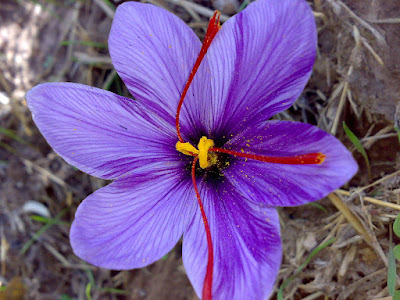
Reading Notes: Persian Tales Part B (Saffron crocus: image by Serpico ) The Merchant and the Saffron , translated by D.L.R. Lorimer and E.O. Lorimer and illustrated by Hilda Roberts (1919) Some of the previous stories in this part of the unit were a little unclear for me at times, and this was one of the stories that was easier to read after those. I think it is because this story does not have any of the dream-like things of the others and there are not many references made that would seem obscure to me. I like that Malik Ahmad ended up being repaid for purchasing the saffron from the merchant. The merchant continued to help him until it seemed things appeared to be more in his favor.  Shah Abbas and the Poor Mother ,  translated by D.L.R. Lorimer and E.O. Lorimer and illustrated by Hilda Roberts (1919) I enjoyed several aspects of this story. I like that Shah Abbas is a kind person, since kings are not always kind in stories similar to this. There were a few p...

Reading Notes: Persian Tales Part A

Image
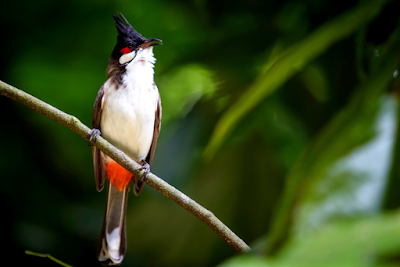
Reading Notes: Persian Tales Part A (Bulbul: image by _paVan_ ) The Wolf and the Goat , translated by D.L.R. Lorimer and E.O. Lorimer and illustrated by Hilda Roberts (1919) This story was surprising in some ways and also unique compared to other things I have read. The first part of the Persian Tales unit continued with some of these same things that were new or unusual to me in other stories. I am sure I was probably not supposed to laugh when the goat told the wolf to fight her, but the delivery of the line seemed comical to me because of its abruptness. The mix of dialogue using rhyming/poetry and regular speaking was different from what I am used to. I am still not sure if I like it or not even after seeing it again in several stories that followed this one. The ending of this story and the others also involve a line about a sparrow not returning home. I do not understand what it means right now, but hopefully it is explained by the end of the unit.  The Boy Who B...